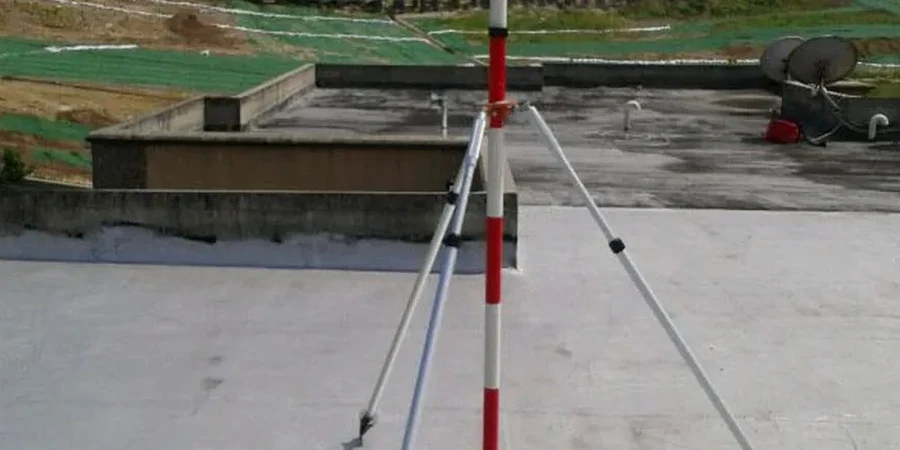
A total station and a row of vibrating wire piezometers are usually the first things we set up on a Mississauga excavation site. The Halton Till here is a dense silty clay matrix with cobbles and boulders left by the Lake Ontario ice lobe; it stands up well during shoring installation, but it can mask groundwater lenses that cause sudden instability. We monitor lateral displacement with inclinometer casings grouted behind the soldier piles, and we track settlement on adjacent structures using optical prisms mounted on the neighboring brick facades common in Streetsville. Because Mississauga’s building boom near Square One and along Hurontario pushes excavations right up against existing utilities, we pair our test pits program with continuous monitoring to confirm that the stratigraphy matches the borehole logs before the first lift is removed. For deeper cuts in the shale bedrock of the Credit River valley, we add crack meters on the rock face and read them daily against the baseline established during pre-construction surveys.
In Mississauga's Halton Till, the real risk isn't immediate collapse—it's the slow, silent movement undetected for days that compromises a shoring system.
Quick answers
What is the typical cost range for geotechnical excavation monitoring in Mississauga?
For a standard excavation monitoring program in Mississauga—including inclinometer casings, piezometers, settlement points, and weekly manual surveys over a 3-month period—the budget typically falls between CA$1,030 and CA$3,130 per month depending on the number of instrument stations and whether automated dataloggers are required. Sites near Lake Ontario with tidal influence or deep cuts into shale usually sit at the upper end due to the additional instrumentation density.
How often should inclinometer readings be taken during active excavation near Square One?
Inclinometer readings must be taken at least once per week during active excavation next to high-traffic infrastructure like the Square One area. Our Mississauga protocol increases frequency to daily readings when the cut depth exceeds 4 meters or when the deflection rate approaches 50% of the design limit. Automated in-place inclinometers can supply continuous readings every 15 minutes for critical shoring sections adjacent to occupied buildings.
How do you handle groundwater monitoring in the Halton Till during Mississauga winters?
Winter monitoring in Mississauga requires heated datalogger enclosures and antifreeze-filled standpipe risers to prevent ice blockage. We use vibrating wire piezometers with built-in thermistors so we can apply thermal correction to the pressure readings—without it, a cold-soaked sensor at minus 15 degrees Celsius can show a false groundwater drop. Manual dip-meter checks are done weekly as a backup, and we keep a snow-cleared access path to every monitoring station.
What triggers an alert in your excavation monitoring system?
We set three alert levels: a notification when deflection or settlement reaches 70% of the design threshold, a warning at 85%, and an immediate stop-work recommendation at 100%. Alerts also trigger on rate changes—a sudden acceleration of movement over 24 hours, even if the absolute value is still low, gets flagged because it often indicates a groundwater lens breakthrough or anchor creep in the Halton Till.