← Home · Roadway

Rigid Pavement Design Mississauga | Concrete Pavement Engineering

Together, we solve the challenges of tomorrow.

LEARN MORE →

Mississauga's transformation from a bedroom community into Ontario's third-largest city placed immense demand on its arterial road network. The 12-lane sections of Highway 401 and the logistics hubs around Pearson International require pavement that withstands constant heavy truck loading without rutting. Rigid pavement design here goes beyond thickness selection—it's about managing curling stresses from our freeze-thaw cycles and ensuring load transfer efficiency across joints that experience millions of equivalent single axle loads. Our team approaches each concrete pavement project with a full geotechnical investigation, tying the structural slab to the subgrade response of the Halton Till and Queenston Shale formations. For sites with marginal subgrade, we integrate CPT testing early to define the stiffness profile before establishing the composite modulus of subgrade reaction, a critical input for Westergaard-based edge loading calculations.

A rigid pavement joint is a controlled crack—designing it means calculating the exact location and moment when the slab will crack under thermal contraction.

How we work

The Queenston Shale that underlies much of northern Mississauga weathers rapidly when exposed—a local condition that demands immediate subgrade protection during construction. In the Meadowvale area, for instance, we've documented sulfate concentrations exceeding 0.3% by mass in the native soils, triggering ACI 360R requirements for Type V cement or blended cements with slag. Our rigid pavement design process starts with a dynamic cone penetrometer survey to map the spatial variability of the subgrade, because uniform support is non-negotiable for jointed plain concrete pavement performance. We model the pavement using finite element methods that incorporate the temperature differential through the slab depth at 14:00 hours in July—Mississauga's critical curling moment. The reinforcement detailing at isolation joints where rigid pavement abuts building columns follows seismic isolation principles adapted for differential movement, even though concrete's inherent stiffness contributes to overall structural damping.
Rigid Pavement Design Mississauga | Concrete Pavement Engineering
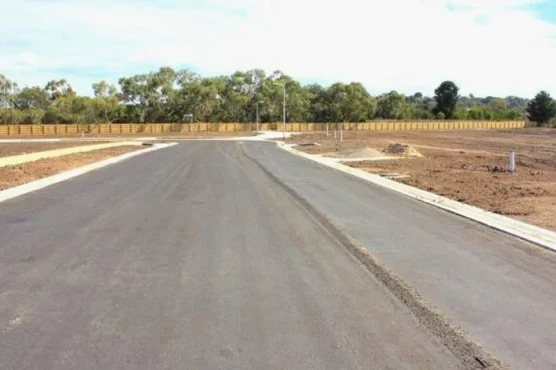
Technical reference image — Mississauga

Site-specific factors

We inspected a concrete bus pad on Dundas Street East where corner breaks appeared within 18 months of placement. The investigation revealed a loss of subgrade support beneath the slab corners—differential frost heave in a poorly drained silty clay pocket had created voids exceeding 15 mm. The original rigid pavement design omitted granular subbase drainage and assumed uniform k-value across the pad. When the concrete curled upward at night under negative temperature gradients, heavy bus traffic at the corners applied stresses that exceeded the modulus of rupture. We redesigned the replacement slab with a 150 mm open-graded drainage layer, thickened edge sections, and diamond-ground joints to restore ride quality. This failure pattern recurs across Mississauga wherever designers underestimate the combined effect of thermal curling and saturated fine-grained subgrades during spring thaw.

Need a geotechnical assessment?

Reply within 24h.

Email: info@geotechnicalengineering.co

Technical data

ParameterTypical value
Design methodAASHTO 93 / PCA / ACI 360R-10
Concrete flexural strength (MR)4.5–5.0 MPa (28-day modulus of rupture, ASTM C78)
Modulus of subgrade reaction (k-value)Determined via plate load test or CPT correlation
Joint spacing (JPCP)24× slab thickness (typical 4.5 m for 190 mm slab)
Load transfer efficiency (LTE)Minimum 75% per AASHTO at 1 million ESALs
Terminal serviceability index (pt)2.5 for divided highways per MTO pavement design manual
Coefficient of thermal expansion (CTE)Measured per ASTM C531 (typically 10×10⁻⁶/°C for local aggregates)

Associated technical services

01

Industrial rigid pavement design

Thickness design for distribution centers and intermodal yards handling 80 kN wheel loads. We model articulated truck turning radii to prevent corner cracking at dock aprons and specify steel fiber dosage when joint spacing exceeds 4.5 m.

02

Joint load transfer analysis

Evaluation of dowel bar diameter, spacing, and embedment length using the PCA's finite element program. We verify LTE remains above 75% for the design traffic spectrum, including the 5:00 AM refrigerated trailer movements common at Mississauga's food terminals.

Regulatory framework

ACI 360R-10: Guide to Design of Slabs-on-Ground, AASHTO Guide for Design of Pavement Structures 1993, CSA A23.1/A23.2: Concrete materials and methods of concrete construction, ASTM C78: Flexural strength of concrete (modulus of rupture), OPSS 350: Concrete pavement construction (Ontario Provincial Standard)

Frequently asked questions

What is the typical design life of rigid pavement in Mississauga's climate?

We design jointed plain concrete pavement for 30 to 40 years for municipal arterials following the AASHTO 1993 guide. The actual lifespan depends on subgrade uniformity, joint maintenance, and exposure to de-icing salts. Mississauga's average of 105 freeze-thaw cycles per year accelerates surface scaling if the air-void system in the concrete is not properly specified per CSA A23.1 exposure class C-2.

How do you handle the transition from rigid to flexible pavement at property lines?

We detail a terminal joint with a sleeper slab at the interface to accommodate differential settlement between the two pavement types. The rigid slab is thickened by 20% over the last 3 meters, and an expansion joint with a compressible filler is placed at the property line. This prevents the flexible pavement from being pushed up by thermal expansion of the concrete slab during Mississauga's summer heat, where slab temperatures can reach 50°C.

What does rigid pavement design cost for a commercial site in Mississauga?

Design fees for rigid pavement on a commercial lot in Mississauga typically range from CA$2,330 to CA$9,850, depending on the paved area, traffic loading classification, and whether subgrade stabilization design is included. A full package with joint detailing, concrete specification, and construction QA/QC protocols for a 2,000 m² yard falls in the mid-range of this bracket.
Location and service area

We serve projects in Mississauga and surrounding areas.

View larger map