← Home · Foundations

Raft/Mat Foundation Design in Mississauga — Engineered for Glacial Soils

Together, we solve the challenges of tomorrow.

LEARN MORE →

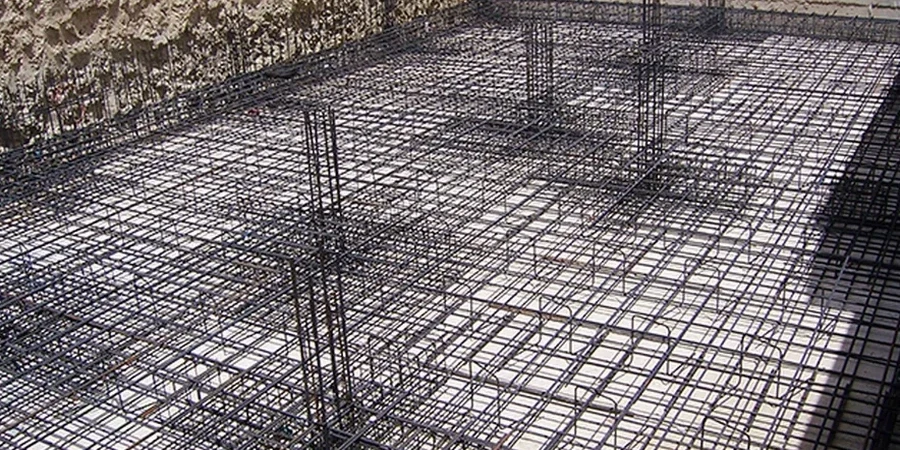
In Mississauga, we see a recurring pattern: projects near the Credit River or along the ancient Lake Iroquois shoreline hit variable silty clay at 3 to 5 meters, and isolated footings simply cannot deliver uniform bearing. A raft/mat foundation design distributes structural loads across a continuous slab, bridging pockets of softer material without deep piling. We correlate CPT test profiles with shear strength parameters from our triaxial lab, so the raft thickness and reinforcement reflect actual subsurface layering, not generic assumptions. For sites where fill thickness exceeds 2 meters, we also run a plate load test to confirm the deformation modulus directly beneath the proposed mat elevation. The result is a foundation system that works with Mississauga's post-glacial stratigraphy, reducing differential settlement to within NBCC serviceability limits while keeping excavation depth manageable.

A properly designed raft turns variable Mississauga till into a predictable bearing platform—differential settlement under 12 mm is achievable with the right modulus input.

How we work

A raft/mat foundation design in Mississauga typically involves a reinforced concrete slab 400 to 900 mm thick, stiffened by perimeter beams and interior ribs depending on column spacing. Our analysis uses subgrade reaction modulus back-calculated from in-situ in-situ permeability and consolidation tests, because the Halton Till and Port Stanley Drift units drain differently under sustained load. We model the slab-soil interaction in finite element software, meshing the mat geometry against a Winkler or continuum soil model, then detail reinforcement per CSA A23.3 for flexure, punching shear, and shrinkage. Key deliverables include excavation profiles, mud slab specifications, waterproofing integration, and construction joint locations—all referenced to Mississauga's frost penetration depth of 1.2 meters. For slabs on grade with heavy rack loads, we design thickened zones under posts and verify bearing pressure against the allowable values from our geotechnical report.
Raft/Mat Foundation Design in Mississauga — Engineered for Glacial Soils
Technical reference image — Mississauga

Site-specific factors

The most expensive mistake we see in Mississauga is pouring a mat foundation on uncharacterized fill without confirming the modulus profile. A contractor stripped topsoil, placed a 500 mm slab, and within two years the southwest corner settled 40 mm—because a buried silty pocket consolidated under sustained dead load. The NBCC 2020 requires a geotechnical investigation for all structures, but the critical step is translating that data into a settlement prediction: we run one-dimensional consolidation analysis on Shelby tube samples and calibrate the results against dilatometer or pressuremeter data. Skipping the interaction between the geotechnical model and the structural design leaves you with a rigid slab sitting on a non-uniform spring bed—and Mississauga's glacial stratigraphy is never uniform. We also check for potential uplift on rafts with deep basements where groundwater at the Cooksville clay plain can reach within 1.5 meters of the surface in spring.

Need a geotechnical assessment?

Reply within 24h.

Email: info@geotechnicalengineering.co

Technical data

ParameterTypical value
Typical slab thickness in Mississauga400 – 900 mm
Allowable bearing pressure (Halton Till)150 – 300 kPa (ULS)
Subgrade reaction modulus range10 – 40 MN/m³
Frost penetration depth (NBCC)1.2 m below grade
Maximum total settlement target< 25 mm (NBCC)
Differential settlement limit< 12 mm over 6 m span
Concrete compressive strength minimum32 MPa (CSA A23.3 exposure C-1)

Associated technical services

01

Geotechnical Characterization for Raft Design

Borehole logging, Shelby tube sampling, consolidation and triaxial testing on Mississauga till and clay units to determine modulus, strength, and consolidation parameters for mat foundation analysis.

02

Structural Design and Detailing

Finite element modeling of raft-soil interaction, reinforcement design per CSA A23.3, punching shear verification at columns, construction joint layout, and waterproofing interface details.

03

Construction Support and Monitoring

Subgrade inspection before mud slab placement, proof rolling verification, concrete pour supervision, and settlement monitoring with optical survey targets during the first 12 months of service.

Regulatory framework

NBCC 2020 — National Building Code of Canada, Part 4 structural design provisions, CSA A23.3 — Design of concrete structures, including Annex A for strut-and-tie models, CSA S6 — Canadian Highway Bridge Design Code (for raft-supported bridge abutments), ASTM D1194 / D1195 — Plate load test procedures (referenced in geotechnical appendix), OPSS.MUNI 1010 — Ontario Provincial Standard Specification for aggregates and granular bedding

Frequently asked questions

What is the typical cost range for raft/mat foundation design on a commercial building in Mississauga?

For a typical commercial or light industrial building in Mississauga, the structural-geotechnical design package ranges from CA$1,620 to CA$5,250, depending on building footprint, number of column loads, and the extent of required subsurface investigation. This includes the finite element analysis, reinforcement detailing, and construction-phase support.

How do you determine the subgrade reaction modulus for a raft on Mississauga's glacial till?

We derive the modulus from consolidation test results on undisturbed Shelby tube samples, then calibrate it against in-situ plate load or pressuremeter data where available. The Halton Till typically yields a subgrade reaction modulus between 10 and 40 MN/m³, but the exact value depends on the till matrix composition and depth to the groundwater table, which varies seasonally across the Cooksville and Streetsville areas.

Does a raft foundation eliminate the need for deep foundations in Mississauga's soft clay areas?

Not always. Along the Credit River floodplain and near Port Credit, soft organic silts and clays can extend to 8 meters or more. In these conditions, we evaluate whether a raft can provide acceptable settlement—and if not, we may recommend a transition to piles or ground improvement such as stone columns beneath the mat. The decision depends on the compressibility profile from consolidation tests and the structural tolerance to differential movement.
Location and service area

We serve projects in Mississauga and surrounding areas.

View larger map