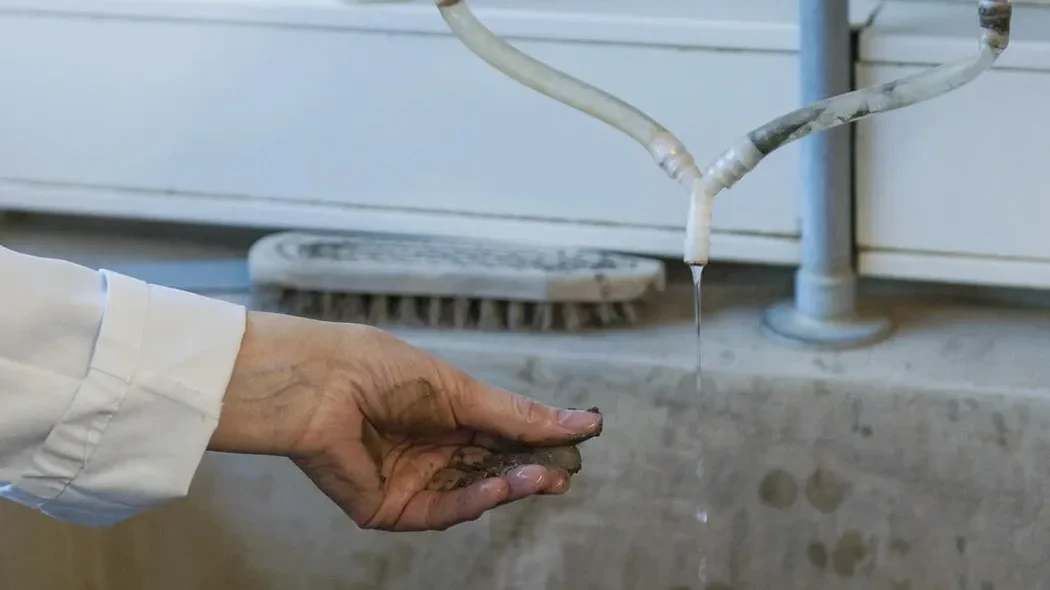
A deep excavation near Hurontario Street hit a silty sand lens at 10 meters, and the inflow rate caught the contractor off guard. The original desk study had classified the Mississauga till as practically impermeable, but in reality, the heterogeneity of the Halton Till can produce abrupt changes in hydraulic conductivity over very short distances. That project reinforced a hard lesson: regional geological maps are no substitute for a field permeability test when groundwater control is critical. We use the Lefranc method in soil and the Lugeon test in fractured rock to give you direct, in-situ measurements that a grain-size correlation from an SPT sample simply cannot match. For projects near the Credit River or along the deep sewer corridors under Burnhamthorpe, understanding how water moves through the ground is the difference between a dry excavation and a costly delay. Our equipment is mobilized on compact rigs that access tight urban lots without disrupting the neighbourhood, and we pair the permeability data with CPT logging to map the stratigraphic boundaries where flow concentrates.
A single Lugeon test in fractured shale tells you more about the real groundwater regime than a hundred lab permeameter readings on disturbed samples.
Site-specific factors
Around Mississauga, we frequently encounter a scenario where the weathered upper zone of the Georgian Bay Formation acts as a leaky aquifer, feeding water into excavations through near-horizontal stress-relief joints. A contractor who relies solely on lab tests of intact rock cores will almost always underestimate the bulk permeability by two orders of magnitude. The real risk shows up during basement construction in the City Centre: the dewatering system is undersized, the subgrade turns to slurry, and the project loses weeks while additional wellpoints are installed. Even worse, uncontrolled seepage through open joints can erode the clay fillings and create piping paths that undermine adjacent footings. The only way to quantify this risk before the shovels go in is with a properly executed Lugeon test that stresses the fractures at the same pressures the dewatering pumps will apply. We also recommend combining the field permeability data with a slope stability analysis when the excavation is deeper than six meters, because pore pressure distribution controls the factor of safety in the temporary cut slopes more than the soil strength parameters alone.
Quick answers
What is the difference between a Lefranc test and a Lugeon test?
The Lefranc test is used in soil and very weak rock to measure permeability in a short, uncased section of a borehole. Water is introduced under a constant or falling head, and the flow rate is recorded. The Lugeon test is designed for fractured rock: a section of the borehole is isolated with a packer, and water is injected at five increasing and decreasing pressure steps. The resulting flow-versus-pressure curve reveals whether the fractures are laminar, turbulent, dilating, or being washed out. In Mississauga, we typically use Lefranc in the overburden and Lugeon in the Georgian Bay Formation shale.
How much does a field permeability test cost in Mississauga?
The cost for a Lefranc or Lugeon test in Mississauga typically ranges from CA$800 to CA$1,510 per test interval, depending on the depth, access conditions, and whether drilling and mobilization are included. A complete investigation with multiple test intervals and a factual report will be priced based on the specific site requirements and the number of boreholes.
How long does it take to get the results from a Lugeon test?
The field execution of a single Lugeon test stage takes about 45 to 90 minutes, depending on the fracture permeability and the time required to reach steady flow at each pressure step. The complete drilling, testing, and grouting of a borehole with multiple stages can extend over one to two days. Our team processes the pressure and flow data on the same day, and the interpreted hydraulic conductivity values are available within 24 hours of test completion. The full report with graphs and recommendations follows within five business days.
Do I need field permeability testing if I already have grain-size analysis results?
Grain-size analysis from an SPT sample gives you an indirect estimate of permeability using empirical formulas like Hazen, but it does not account for the in-situ fabric, fractures, or macro-structure of the soil and rock mass. In Mississauga's glacial tills, the bulk permeability is often controlled by thin silt seams or sand partings that are missed in a disturbed sample. A field test like the Lefranc or Lugeon measures the actual mass hydraulic conductivity, including the contribution of fractures and heterogeneities. For any project involving dewatering, slope stability, or contamination transport assessment, the in-situ measurement is essential.